This is the rule guide for the turn-based checkmate battle game, Mated AF!
Rules
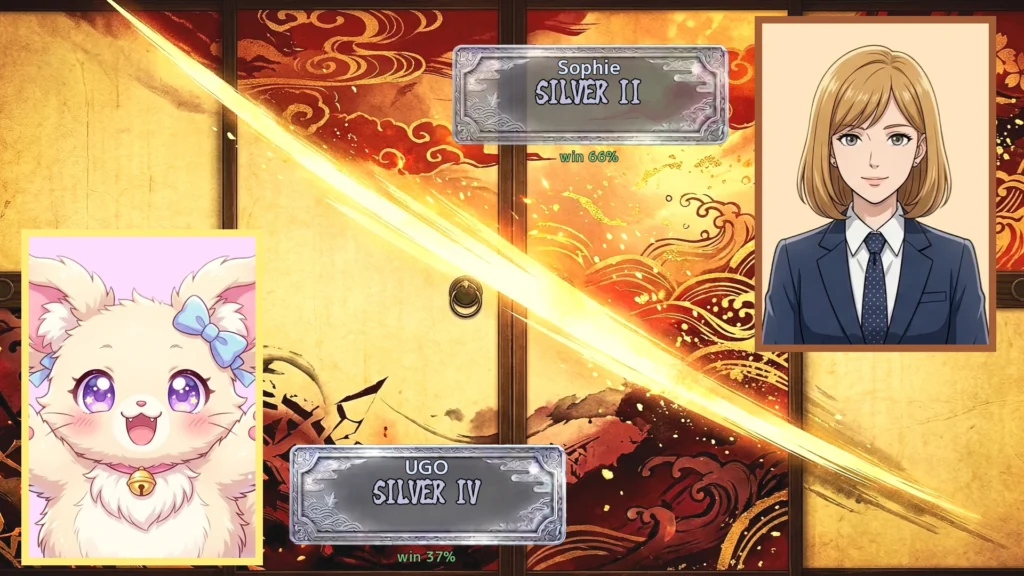
HP
- Both players start with 20,000 HP.
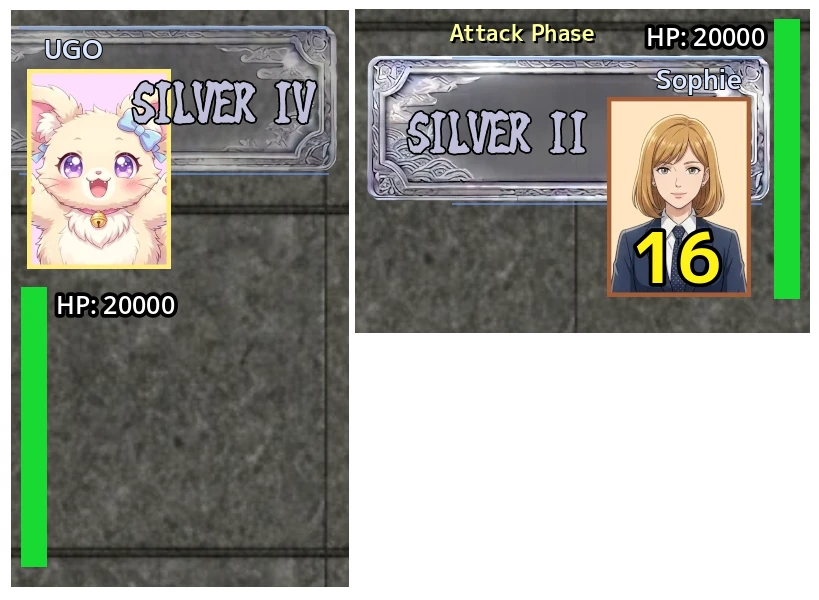
Note: In CPU battles, the starting HP may vary based on the difficulty adjustment.
Board & Initial Piece Placement
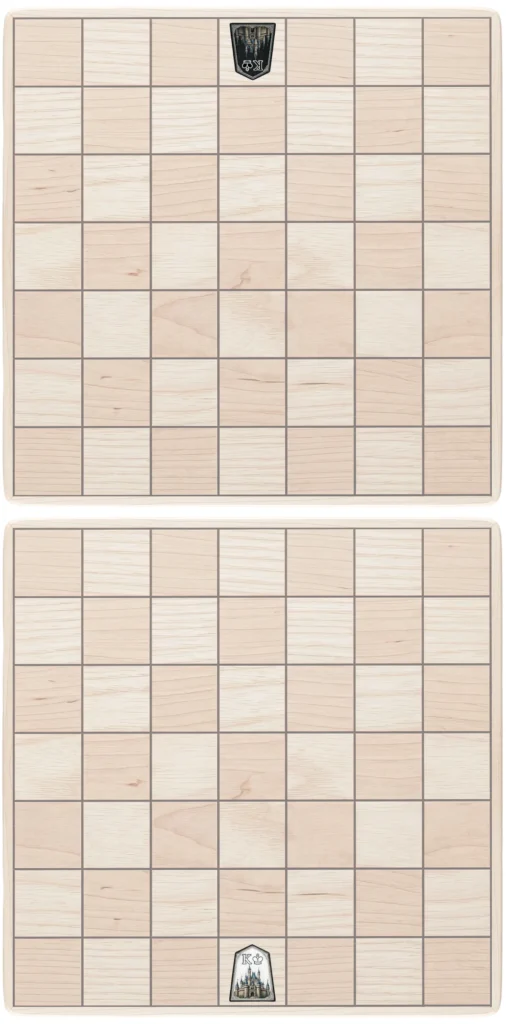
- The game is played on two 7×7 boards:
“Your Board” and “The Opponent’s Board”. - At the start, only the opponent’s King is placed on their board, and only your King is placed on your board.
Hand
- The First Player starts with 4 cards, and the Second Player starts with 2 cards.
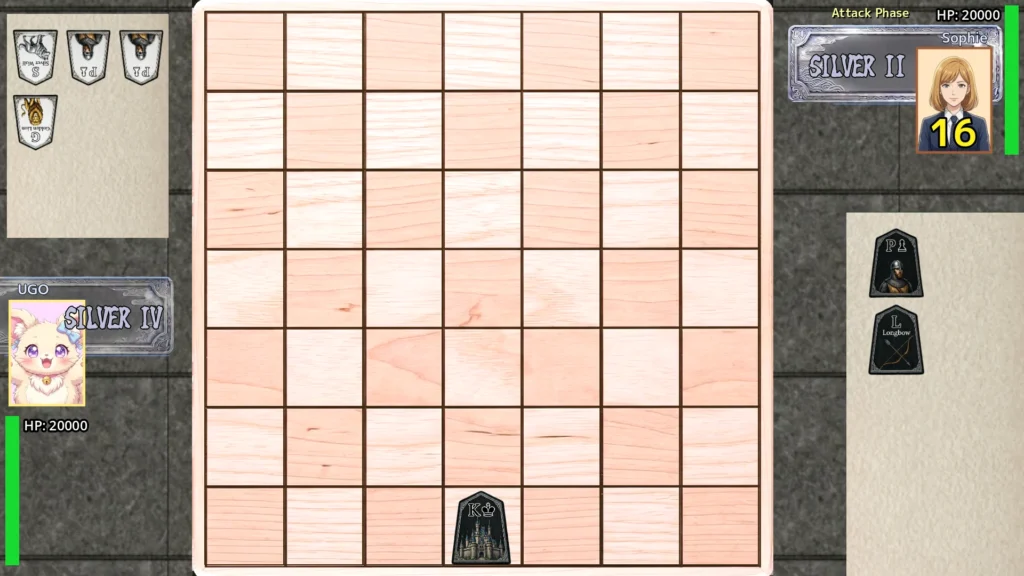
Note: In CPU battles, the CPU (as the second player) will draw 4 cards at the start for difficulty balancing.
- At the beginning of each Attacking Turn, the attacking player draws 4 cards.
- The maximum number of cards you can hold through normal draws is 7.
- Pieces acquired via Ground Pound can exceed this 7-card hand limit.
Turn Flow
Each turn progresses through the following phases:
- Attacker: Attack Piece Placement Phase
- Defender: Defense Piece (Interposition) Placement Phase
- Defender: King’s Ground Pound
- Defender: King’s Evasion Phase
Time Limit
- Attack Phase Time Limit:
Number of cards in hand × 5 seconds
Since you draw 4 cards, the minimum time you will have is 20 seconds. - Defense Piece (Interposition) Placement Phase:
10 seconds - King’s Evasion Phase:
5 seconds
Note: Running out of time does not result in an instant loss;
the game will simply force-progress to the next phase.
Attacker: What to do on your Attack Turn
Basic Strategies
- First and foremost, set up a checkmate.
- Add more pieces to intensify the attack on the enemy King.
Caution: If you place a piece around the enemy King without any backup (a supporting piece protecting it), that piece will be captured during the defender’s King’s Ground Pound phase. If your pieces rely on each other for support, a single unsupported link can trigger a chain reaction of captures.
Advanced Strategies
3. Manage and cycle your hand.
4. Place pieces strategically to block the enemy King from advancing.
5. Conserve high-value pieces to aim for a higher score later and to maintain your defense options.
6. Let the opponent capture low-value pieces to clutter their hand and disrupt their next draw.
Damage Calculation
- Minor Pieces: Base 500 damage.
Doubles with each additional consecutive hit (x2). - Major Pieces (Rook / Bishop): Base 1,000 damage.
Quadruples with each additional consecutive hit (x4).
・Damage Chart for Minor Pieces (Up to the standard max hand of 7)
1 Hit 500
2 Hits 1,000
3 Hits 2,000
4 Hits 4,000
5 Hits 8,000
6 Hits 16,000
7 Hits 32,000 (OVERKILL)
An exclusive in-game visual effect triggers when you achieve an OVERKILL.
If you manage to draw a hand that can set up an unavoidable OVERKILL,
you can defeat even the strongest of opponents.
Conversely, if your opponent draws the hand for an unstoppable OVERKILL,
all you can do is cry out, “Mated AF!“
Defender: What to do on your Defense Turn
- Defense Piece (Interposition) Phase
Basic Strategy:
- Place defense pieces to block lines of fire coming from the enemy’s Longbow, Rook, or Bishop.
Advanced Strategy:
2. Manage and cycle your hand.
- King’s Ground Pound (Executed automatically; no player input required)
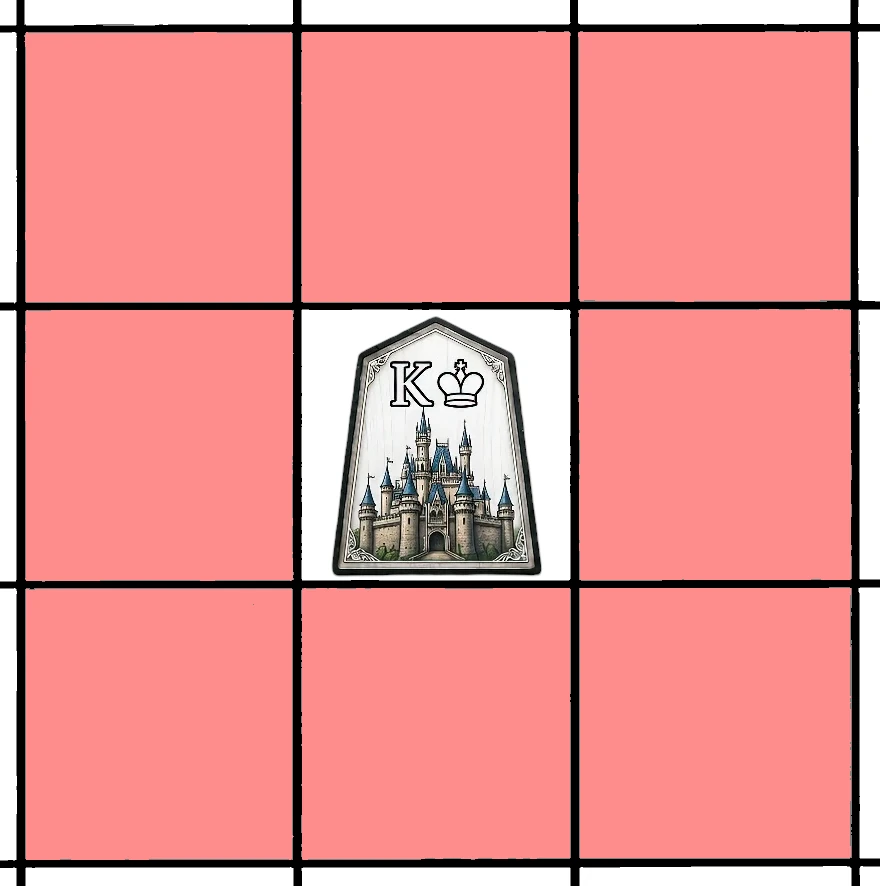
- The King will blow away all unsupported enemy pieces within its movement range and add them directly to your hand.
Supported pieces (pieces protected by another enemy piece) cannot be blown away.
- King’s Evasion Phase
- Move your King to a safe square.
- Advance forward.
Differences from Chess
Piece Lineup
- Pieces not found in standard Chess:
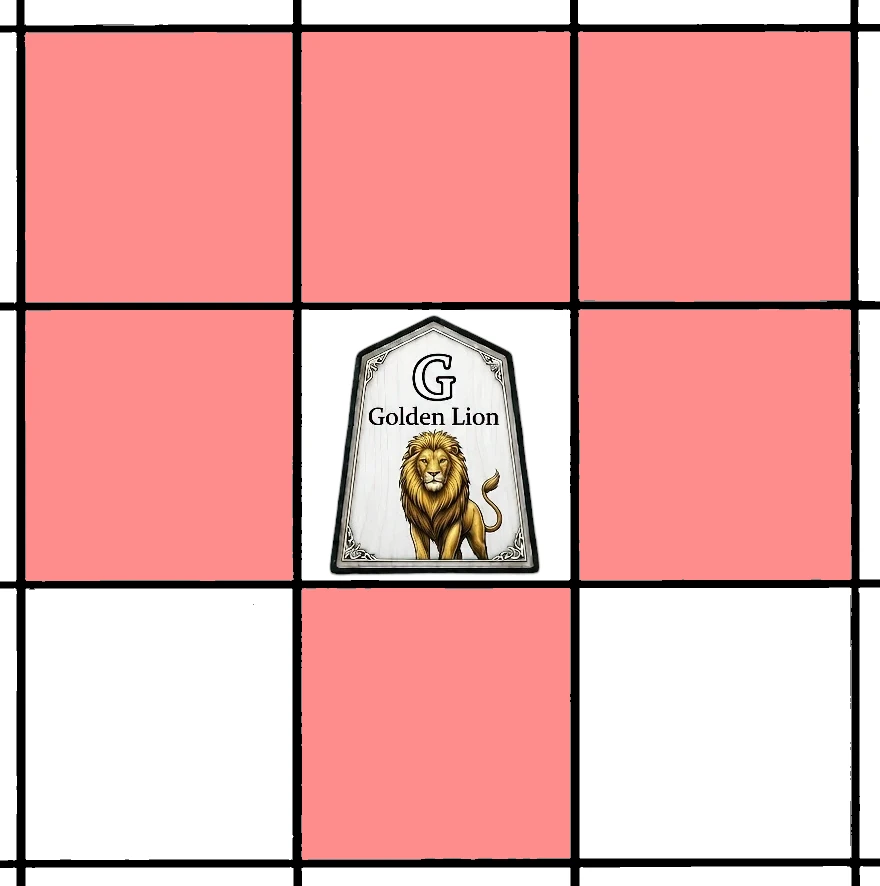
<Golden (G) Lion>
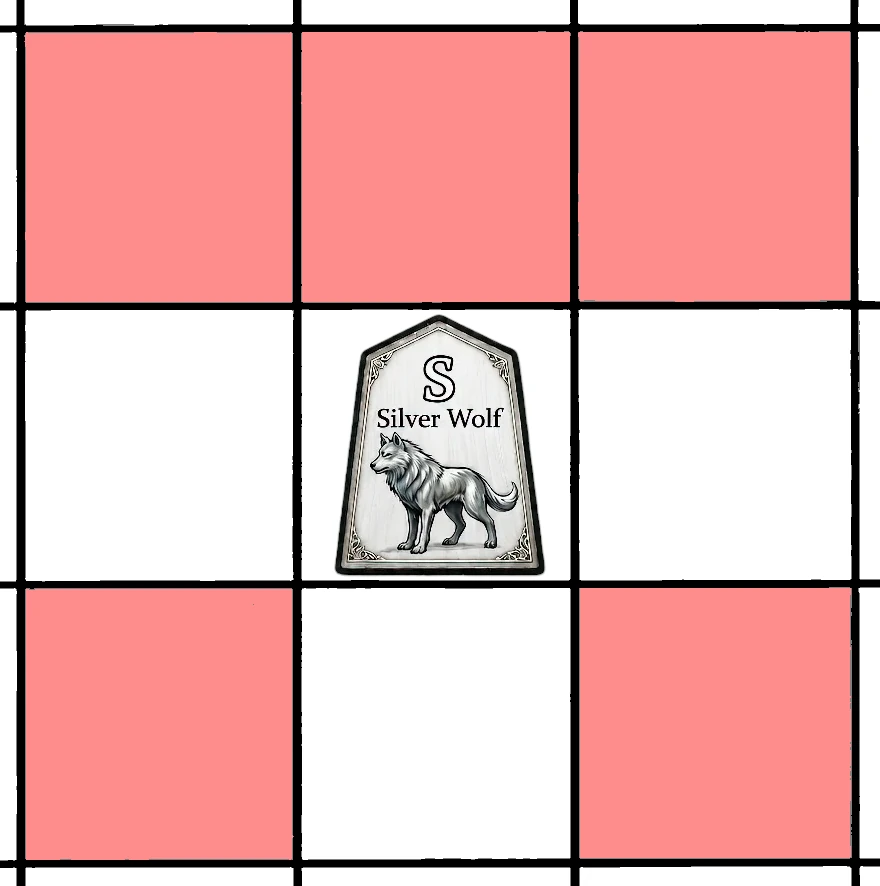
<Silver (S) Wolf>
<Longbow (L)>
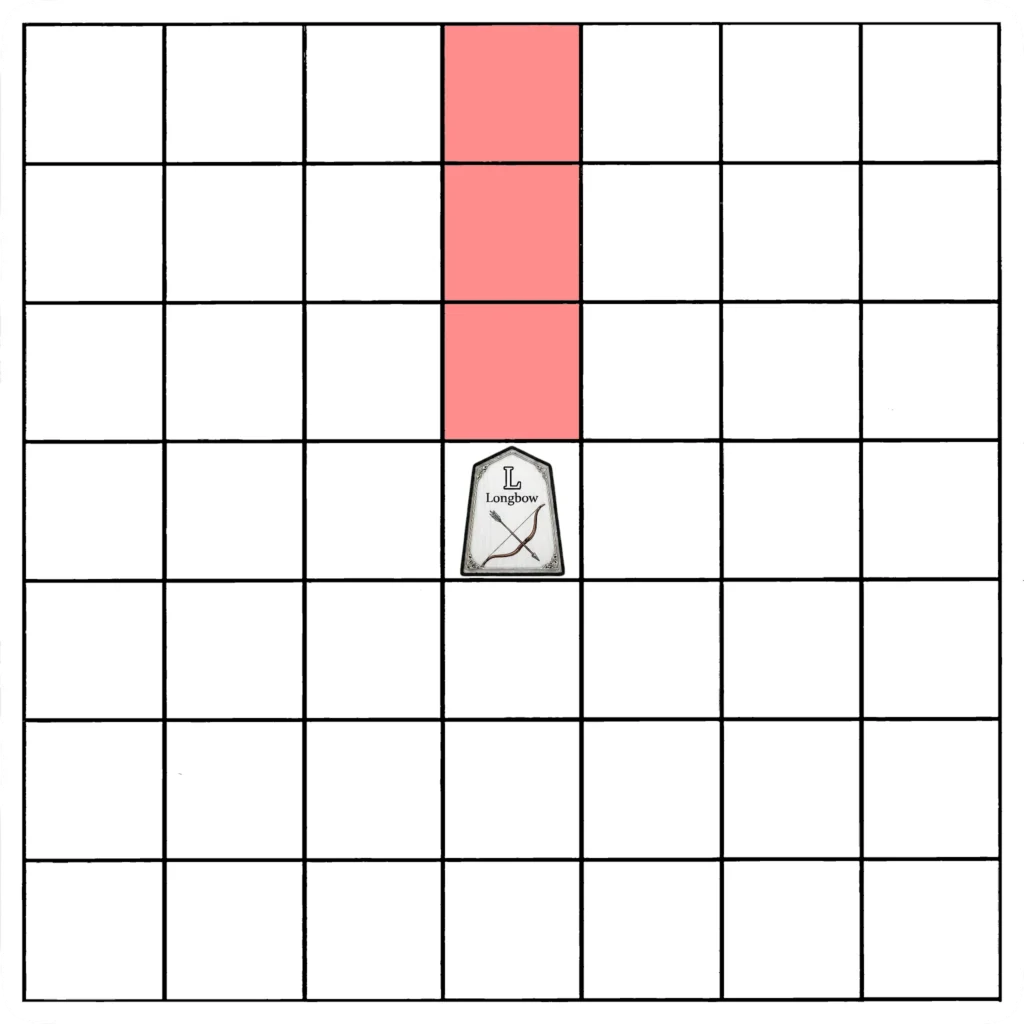
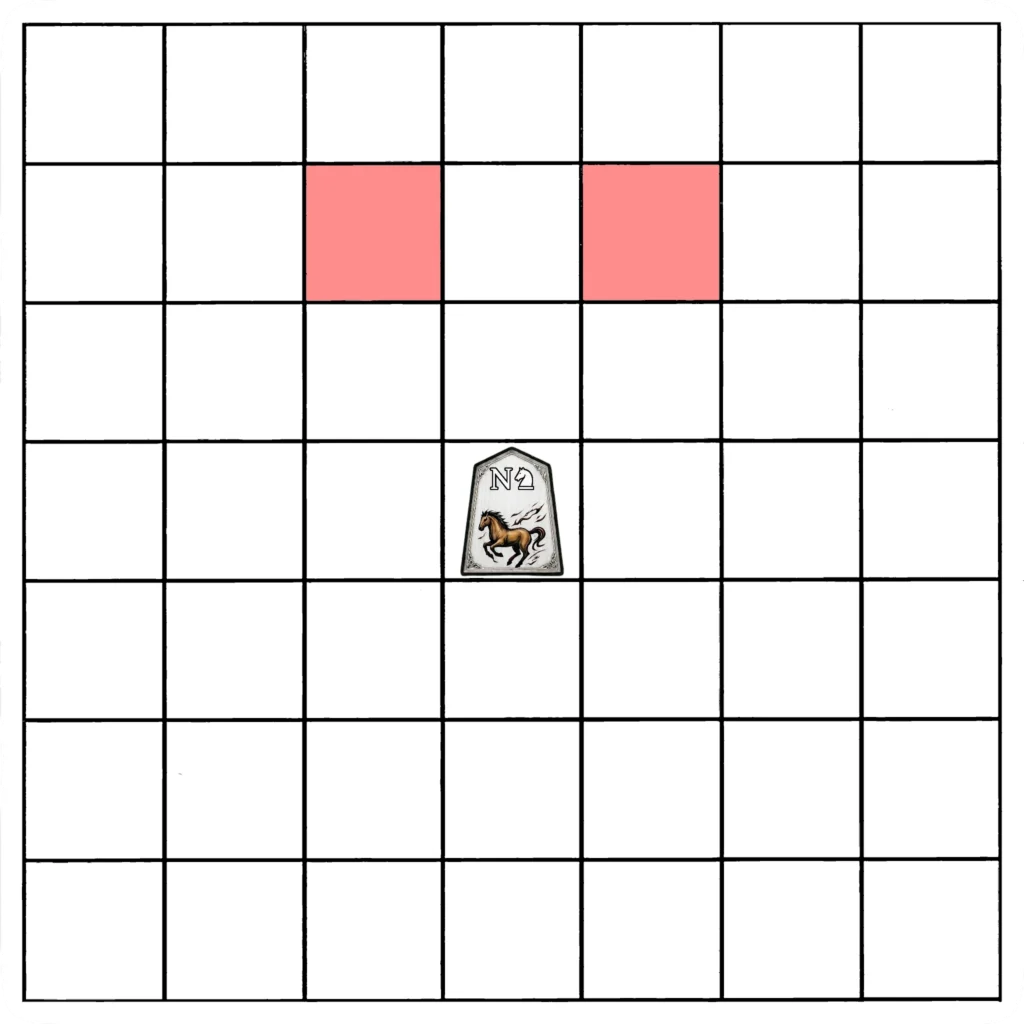
- Nerfed due to being overpowered:
<Knight (N)>
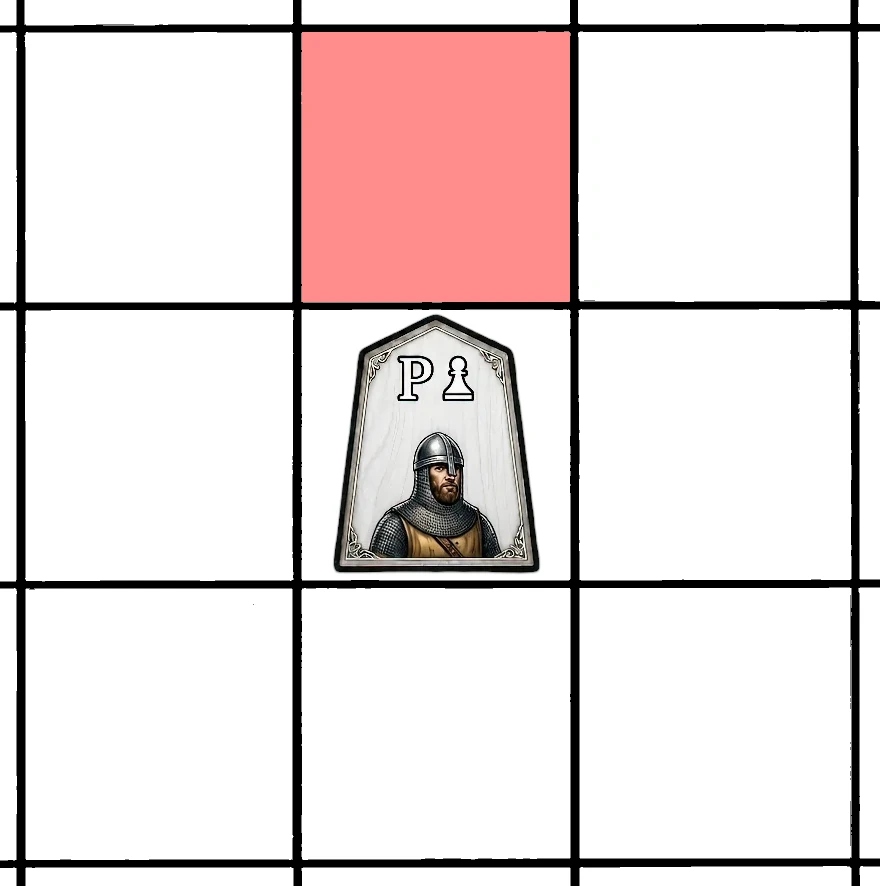
- Standard Chess pieces:
<Pawn (P)>
<Rook (R)>
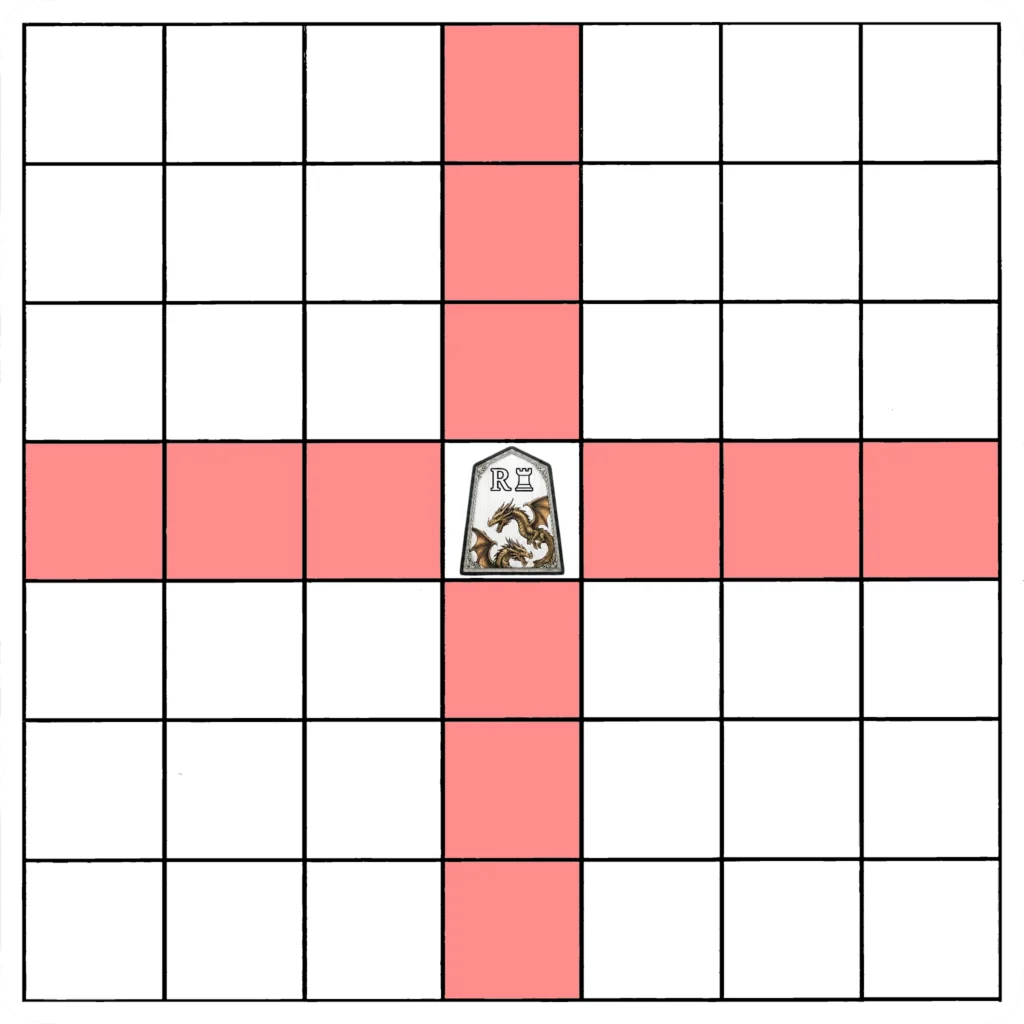
<Bishop (B)>
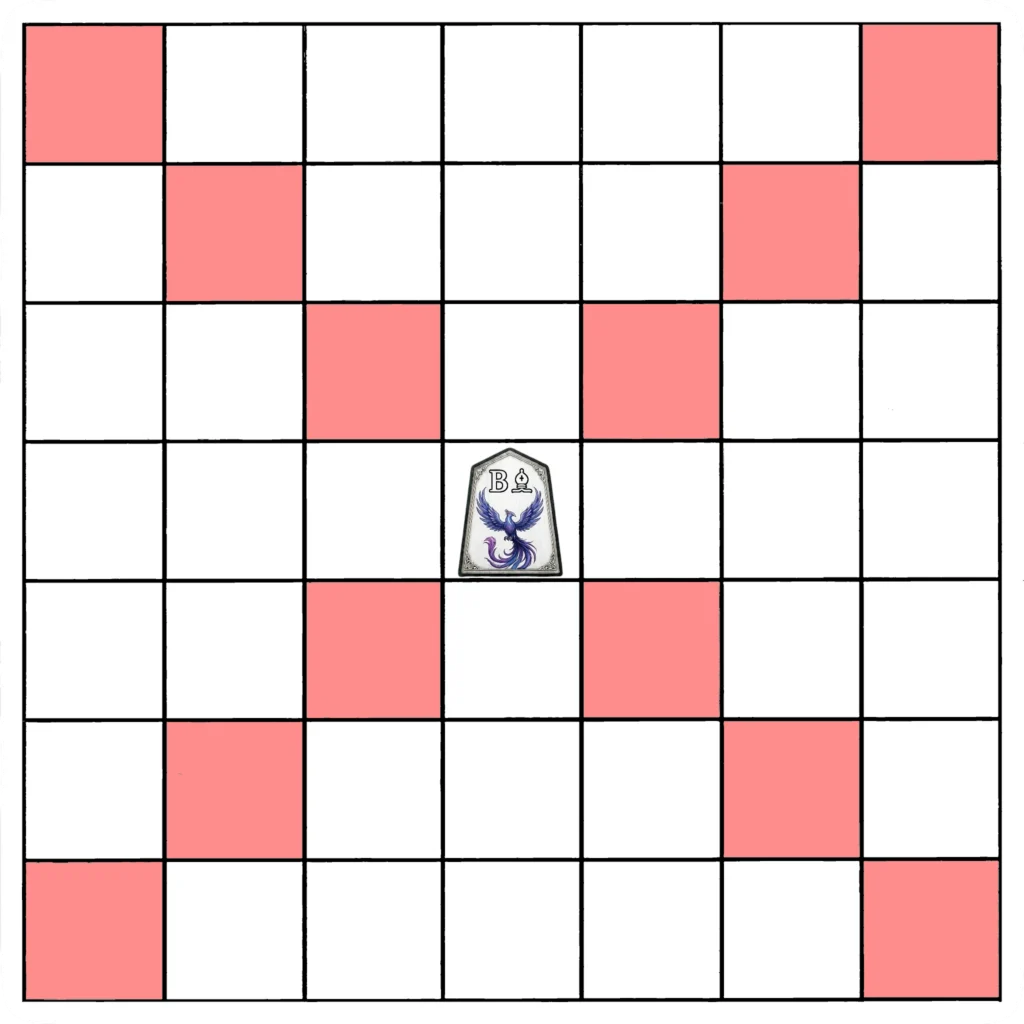
<King (K)>
Two Pawns (Pawn Stack Penalty)
- Placing two or more Pawns in the same vertical file (column) is an illegal move.
If you trigger this penalty, you will immediately take self-inflicted damage.
The damage is calculated using the exact same formula as the attacking damage, multiplied by the number of Pawns involved in the penalty
Prohibited Squares for Placement
Pawn:
Cannot be placed on the opponent’s back rank (last row) or directly in front of the enemy King.
Longbow:
Cannot be placed on the opponent’s back rank.
Knight:
Cannot be placed on the opponent’s back rank or the row right before it (the last two ranks).
Rook / Bishop:
Cannot be placed within the 1-square radius immediately surrounding the King.
This prevents unfair, unavoidable x4 damage setups that players wouldn’t be able to counter.
Defense Crushing
- To prevent games from stalling out by simply blocking every single Rook or Bishop line, Pawns and Longbows have been given the ability to crush defense pieces.
This allows you to forcefully open up paths for your Rooks and Bishops.
In terms of piece value economy, using two minor pieces for a x4 damage multiplier is perfectly balanced with using a major piece plus a Pawn or Longbow (also two pieces) for a x4 multiplier, keeping the gameplay fair.
Note: Defense Crushing occurs after the King’s Evasion Phase. If an enemy piece relies solely on the line of sight of a Rook, Bishop, or Longbow, and that line is blocked by a defense piece during the defense phase, that enemy piece will lose its support and be captured during the King’s Ground Pound.
To ensure the Longbow feels like an upgrade over a standard Pawn, the Longbow will disappear from the board along with the defense piece it crushes. This opens up advanced tactical plays where vanishing a Longbow unblocks a hidden line of fire from another piece behind it.
Castling
- When your King charges forward and reaches the furthest rank of your own board, its Ground Pound triggers a unique Castling ability. Instead of a standard chess switch, this blast format explodes and blows the enemy King all the way back to their starting line.
【PC】
【Mobile】